


News
- ▶ Qingdao Shinuode Showcases Next-Generation Portable Power & Air Compressor Solutions at Global Sources Consumer Electronics Show 2026
- ▶ Is it safe to store a cordless SUV tire pump in a hot vehicle?
- ▶ When a portable air pump cannot make a punctured SUV tire safe to drive
- ▶ How accurate is the auto shutoff on a portable air pump for SUV tires?
- ▶ Using a portable air pump to reinflate SUV tires after off-roading
Message
Electronic Injection Components vs Mechanical Alternatives: What Is the Difference?
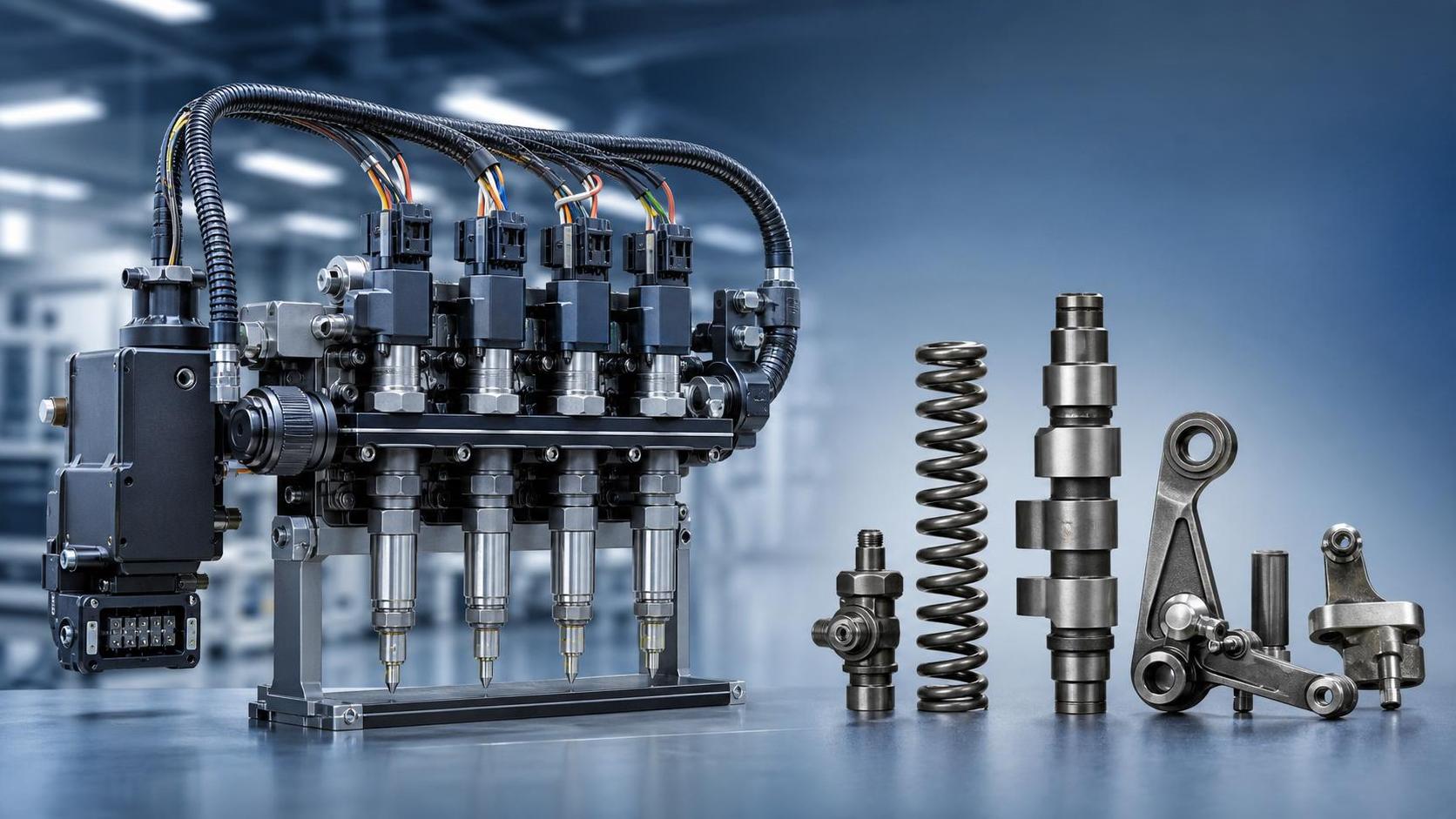
Electronic Injection Components vs Mechanical Alternatives: What Is the Difference?
When evaluating manufacturing options, the difference often starts with control accuracy.
Electronic injection components use sensors, signals, and programmed logic.
Mechanical alternatives depend on springs, cams, levers, valves, and fixed physical movement.
That basic difference shapes performance, maintenance, customization, and supply planning.
In real sourcing decisions, this is not only a design issue.
It affects product consistency, lifecycle cost, and delivery confidence across industrial production.
How Electronic Injection Components Work
Electronic injection components regulate flow, timing, pressure, or activation through electrical control.
They usually connect with sensors, controllers, and actuators inside a larger automated system.
Because settings can be adjusted digitally, response is faster and more precise.
This matters in applications where repeatability and process stability directly influence output quality.
Mechanical systems, by contrast, rely on fixed geometry and manual tuning.
They can be reliable, but they are less flexible when process conditions frequently change.
Core Differences That Affect Selection
1. Precision and Repeatability
Electronic injection components usually deliver tighter control over output variables.
That supports lower variation between batches and more predictable production results.
Mechanical alternatives may drift over time because of wear, friction, or manual adjustment limits.
2. Adaptability
If product specifications change often, electronic injection components are easier to reconfigure.
Software-based adjustments reduce downtime compared with replacing mechanical parts.
This is especially useful in custom manufacturing and short-run production environments.
3. Maintenance Profile
Mechanical systems are easier to understand visually and may be simpler to repair onsite.
However, they often require more frequent calibration and replacement of worn components.
Electronic injection components need stronger diagnostic capability, but they support better monitoring.
That can reduce unexpected shutdowns when maintenance planning is mature.
4. Total Cost Over Time
Upfront cost is only one part of the comparison.
Electronic injection components may cost more initially, especially in integrated systems.
But they often improve yield, reduce waste, and lower manual intervention.
Mechanical alternatives may look economical first, yet hidden labor and quality costs can grow.
A Practical Comparison Table
When Mechanical Alternatives Still Make Sense
Electronic injection components are not automatically the right answer in every project.
Mechanical options still fit low-complexity equipment and stable operating environments.
They are also useful where technical support for electronic diagnostics is limited.
If accuracy demands are modest, a mechanical system may offer acceptable value.
The key is matching system complexity to the real production goal.
What to Check Before Making a Decision
A solid selection process should go beyond catalog specifications.
- Define tolerance requirements and acceptable batch variation.
- Estimate how often process settings will need adjustment.
- Compare labor, scrap, maintenance, and downtime costs.
- Review supplier control over tooling, production, and customization.
- Confirm delivery stability for future scaling or repeat orders.
This is where supplier capability becomes part of the technical decision.
Qingdao Shinuode Intelligent Technology Co., Ltd. brings more than ten years of manufacturing experience.
Its 5,000 square meter facility, integrated production chain, and in-house mold development support consistent execution.
That matters when electronic injection components must align with custom requirements and delivery schedules.
For reference, solutions such as APS-537 can be evaluated within that broader sourcing framework.
Final Takeaway
The real difference between electronic injection components and mechanical alternatives is control flexibility.
Electronic systems support better precision, faster adjustment, and stronger long-term process management.
Mechanical systems remain useful where operations are simple and requirements stay stable.
The smarter choice depends on production targets, service capability, and cost over the full operating cycle.
Start with process needs, test supplier depth, and compare total value instead of price alone.
That approach leads to more reliable decisions and better performance from electronic injection components.
Please give us a message