


News
- ▶ Qingdao Shinuode Showcases Next-Generation Portable Power & Air Compressor Solutions at Global Sources Consumer Electronics Show 2026
- ▶ Does nitrogen reduce pressure loss in automotive tire inflation?
- ▶ Why does the TPMS light stay on after automotive tire inflation?
- ▶ Which pressure rating should you use for automotive tire inflation?
- ▶ When should you check cold pressure for automotive tire inflation?
Message
Why does the TPMS light stay on after automotive tire inflation?
A TPMS light that stays on after Automotive Tire Inflation usually means one of four things: the tires are still below the correct cold pressure, the system has not updated, a vehicle-specific initialization or relearn is required, or a sensor/system fault is present. Adding air fixes low pressure, but it does not repair a failed sensor or automatically complete every reset procedure.
In a service bay, this can turn a routine inflation job into a callback: the gauge shows acceptable pressure, yet the warning remains when the vehicle is returned. Start by verifying actual tire pressure against the vehicle placard, then identify the warning pattern and TPMS type. Resetting first can conceal an incorrect baseline, particularly on indirect systems.
Confirm the pressure before touching the reset function
Use the recommended cold inflation pressures on the vehicle’s tire placard, commonly found on the driver’s door opening, or in the owner’s manual. The maximum pressure molded into a tire’s sidewall is not the vehicle’s inflation target. Front and rear specifications may differ, and some vehicles specify different pressures for particular loads or operating conditions.
A cold tire is generally one that has been parked for at least three hours or driven only a short distance at low speed; follow the vehicle manufacturer’s definition. Driving heats the tire and raises its pressure. A warm tire inflated only to the cold placard value may become underinflated after cooling. Do not bleed a warm tire down to the cold specification simply because its reading is higher.
- Measure every road tire. Do not assume the warning refers only to the tire the customer noticed. Check the spare if the vehicle monitors it.
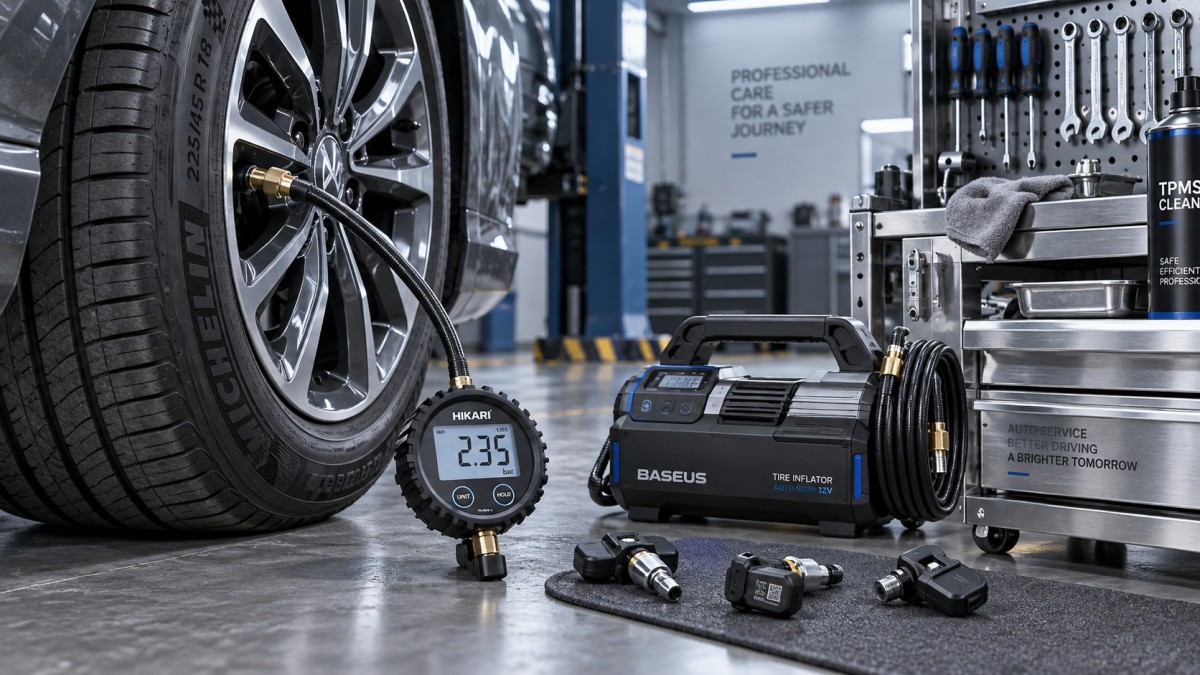
- Use a reliable pressure gauge. Verify questionable inflator readings with a separate gauge and check that both display the same unit, such as PSI, bar, or kPa.
- Compare readings with the correct axle specification. Record tire temperature conditions so warm readings are not mistaken for confirmed cold pressures.
- Check for leakage. Inspect the tread, bead area, valve stem, and valve core. Persistent pressure loss requires repair, not repeated inflation.
Measure with the inflator stopped rather than relying only on a display during active pumping. Recheck after disconnecting the hose, especially if the valve connection leaked or released noticeable air.
The warning pattern changes the diagnosis
A continuously illuminated low-pressure symbol generally directs attention to inflation. On many vehicles, a symbol that flashes for about a minute and then remains illuminated indicates a TPMS malfunction. These patterns are useful starting points, not universal rules: confirm the meaning in the vehicle’s manual and review any accompanying dashboard message.
A displayed pressure value may be the last transmitted reading rather than a live measurement. When the display disagrees with a verified gauge, establish actual pressure first, then investigate whether the vehicle has received fresh sensor data.
Separate a delayed update from an incorrect relearn
Direct TPMS uses pressure sensors inside the wheel assemblies. Depending on the vehicle, sensors transmit after wheel movement, periodic intervals, or activation with a compatible service tool. Correct inflation may therefore require the prescribed driving conditions before the warning clears. There is no single driving speed or duration that works for every vehicle.
Indirect TPMS estimates pressure loss from wheel-speed information and, on some systems, tire vibration characteristics. It does not directly measure pressure inside each tire. These systems commonly require initialization after pressure adjustment or tire service, followed by a learning drive.
For indirect systems, set all tires correctly before storing a new baseline. Initializing with an underinflated tire can teach the system an unsuitable reference. Unequal tire sizes, significant wear differences, or wheel-speed faults can also interfere with operation.
With direct systems, distinguish refreshing pressure readings from registering sensor identities. Inflation alone does not usually require sensor-ID registration, while sensor replacement or wheel-set changes may. Tire rotation can require position relearning on some vehicles but not others. Confirm the service procedure rather than treating “reset,” “relearn,” and “drive cycle” as interchangeable instructions.
When correct inflation does not clear the light
Use a compatible TPMS activation tool and a diagnostic scanner with access to the relevant module. A basic emissions-code reader may not retrieve TPMS faults. Check sensor identifiers, pressure readings, and available status information, then compare them with registered vehicle data.
- One sensor does not respond: Repeat activation using the correct vehicle selection and tool position. A depleted sensor battery is possible, but tool compatibility and sensor damage must also be considered.
- All sensors respond, but the vehicle reports one missing: Investigate registration, sensor compatibility, receiver operation, or communication faults.
- The fault follows recent tire work: Inspect for sensor damage, incorrect replacement programming, an incompatible sensor, or an incomplete relearn.
- Pressure keeps falling: Diagnose the leak even if the warning temporarily clears. A reset cannot repair a puncture, leaking valve, or bead sealing problem.
Many direct-TPMS sensor batteries are sealed into the sensor assembly, so battery failure commonly requires sensor replacement. Do not replace a sensor solely because the lamp is on. Confirm the fault, install a compatible part, service the valve components as specified, and complete the required registration or relearn.
Use the inflator for pressure correction—not TPMS repair
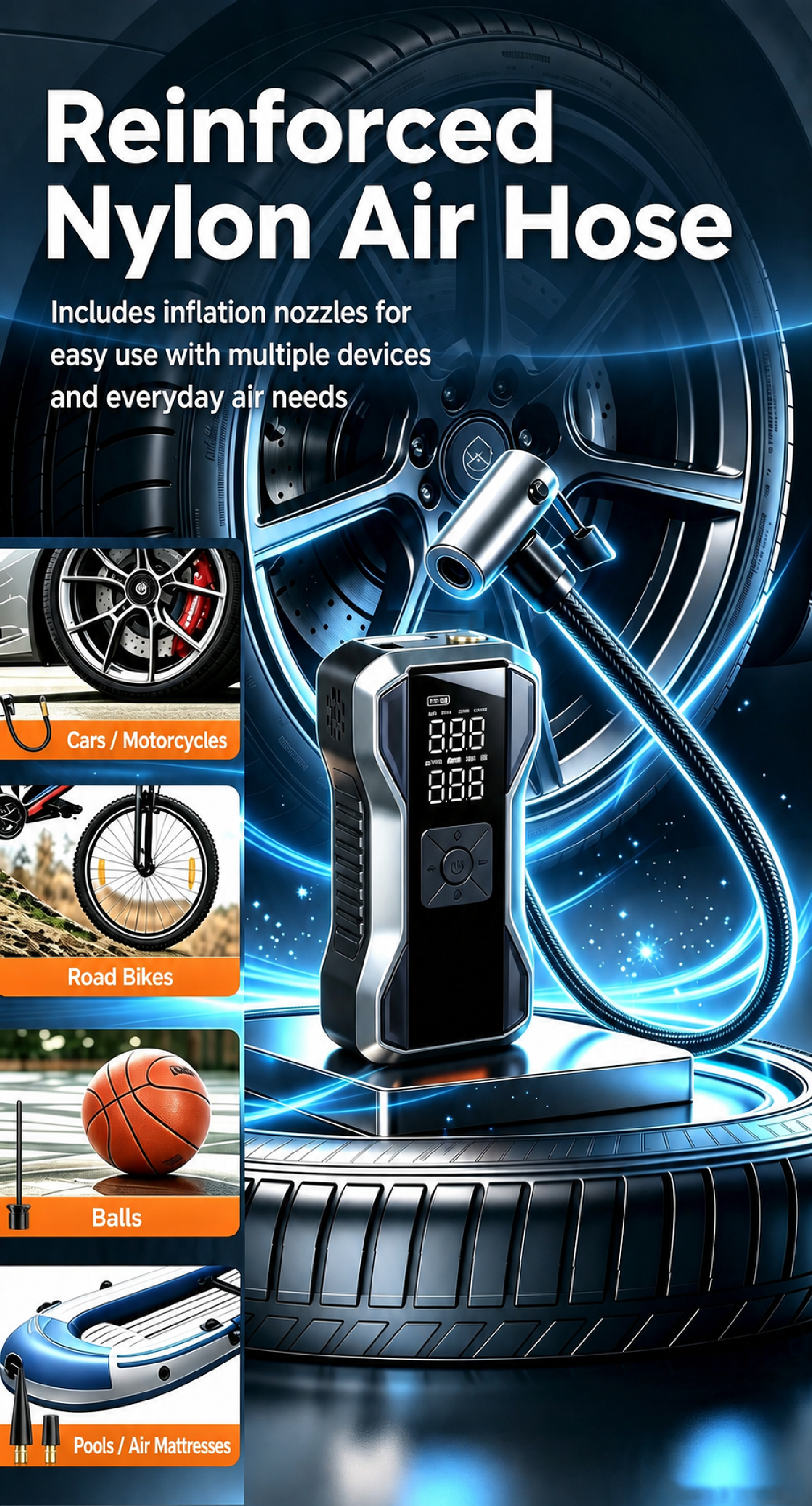
A portable inflator can support roadside pressure correction or workshop top-ups when used within its operating instructions. The OEM Heavy Duty Jump Starter With Air Pump 150 PSI Super Fast Tire Inflator Car Battery Booster Jumper Starter for car APS-337 combines tire-inflation and jump-starting functions and lists a 150 PSI specification. That figure is not a recommended passenger-car tire pressure; the vehicle placard remains the reference.
The APS-337 can serve the inflation stage of the diagnostic process, but its listed functions do not establish TPMS sensor activation, fault-code reading, or relearn capability. Those tasks require vehicle procedures and appropriate diagnostic equipment. Verify final pressure with a suitable gauge, and follow the inflator’s instructions for operating limits and cooling intervals.
Verify the repair before handing back the vehicle
After correcting pressure or completing a confirmed repair, perform the manufacturer’s update or learning procedure. Do not road-test a vehicle with a visibly damaged tire, substantial air loss, or unsafe pressure simply to extinguish the warning.
For a direct system, confirm that expected sensors are communicating and the warning behaves normally. For an indirect system, confirm that initialization was accepted and complete the specified learning drive. Record measured pressures, whether the tires were cold or warm, relevant fault information, and the procedure performed.
If the light remains on despite verified pressure and the correct update procedure, continue system diagnosis rather than adding extra air to force it off. A customer report that the warning returns the next morning should trigger a cold-pressure and leak check; a flashing warning or missing sensor reading points toward communication or component testing.
Please give us a message