
News
- ▶ Are Jump Starters & Battery Boosters Becoming a Standard Car Essential?
- ▶ Jump Starters & Battery Boosters Demand Outlook for the Next Sales Cycle
- ▶ What Recent Battery Failures Reveal About Jump Starters & Battery Boosters
- ▶ Jump Starters & Battery Boosters: New Standards Changing Product Reviews
- ▶ 2026 Price Pressure in Jump Starters & Battery Boosters Supply
Message
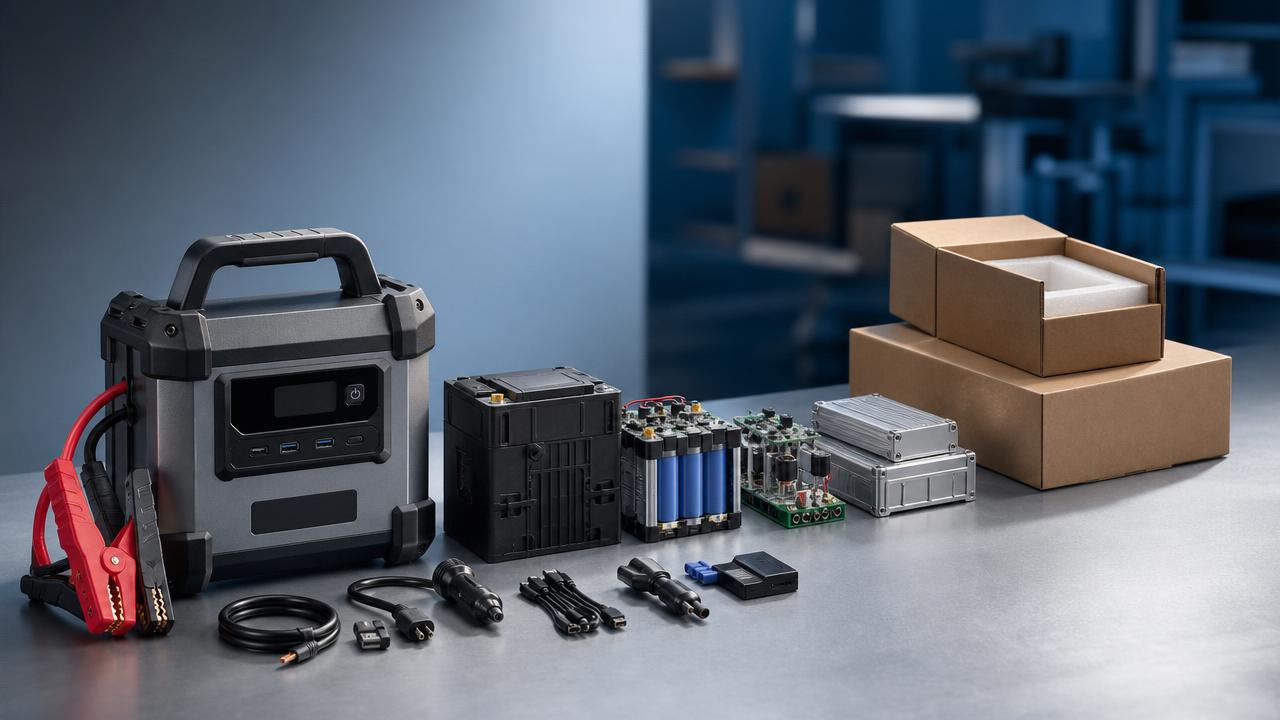
As 2026 approaches, procurement teams sourcing Jump Starters & Battery Boosters are facing growing price pressure driven by material costs, lead-time uncertainty, and rising customization demands. For buyers, choosing a manufacturer with integrated production, stable capacity, and dependable delivery is becoming critical to balancing cost control with product quality and supply continuity.
Why are Jump Starters & Battery Boosters under stronger price pressure in 2026?
For procurement professionals, price movement is rarely caused by one factor alone. In Jump Starters & Battery Boosters, cost pressure is forming at the intersection of batteries, electronics, housing materials, labor scheduling, packaging compliance, and shipping volatility.
At the same time, buyers are asking for more than basic starting power. They increasingly request private labeling, tailored shell design, accessory bundles, multilingual manuals, and flexible packaging formats. Each added requirement affects tooling, testing, and production planning.
This means the lowest unit price on paper may no longer represent the lowest total procurement cost. Delayed shipments, unstable quality, and repeated revisions can quickly erase any initial savings.
- Battery cell and electronic component costs remain sensitive to upstream market swings.
- Demand for faster delivery is increasing even as customization complexity rises.
- Global buyers are placing greater emphasis on packaging, transport, and compliance readiness.
- Procurement teams are under pressure to reduce risk, not only price.
What this means for sourcing decisions
In this environment, Jump Starters & Battery Boosters should be evaluated as a supply-chain project, not a simple product purchase. Buyers need to look at factory integration, engineering response speed, consistency across batches, and the supplier’s ability to absorb change without disrupting delivery.
What procurement teams should compare before requesting quotations
Before comparing prices for Jump Starters & Battery Boosters, it helps to align the core purchasing dimensions. A quote without technical and delivery context can lead to misleading comparisons and painful negotiations later.
This comparison framework helps buyers avoid price-only discussions. For Jump Starters & Battery Boosters, the real purchasing advantage often comes from fewer disruptions, faster adjustments, and lower hidden costs across the order cycle.
A practical shortlist checklist
- Confirm target market, expected output level, accessory requirements, and packaging format before RFQ.
- Ask whether mold design, assembly, and production are outsourced or controlled in-house.
- Check whether lead time changes when customization is added.
- Review sample consistency against the quotation and final packing list.
How integrated manufacturing reduces cost risk for Jump Starters & Battery Boosters
When a supplier depends heavily on outsourcing, every design change can trigger a chain reaction. Mold revision, material handoff, production scheduling, and final inspection become harder to coordinate. Buyers then face extra communication cost and more uncertain lead times.
Qingdao Shinod Intelligent Technology Co., Ltd. operates with a fully integrated production chain covering R&D, mold design, and mass production. This matters because integrated control can shorten decision loops and reduce the friction that often raises total sourcing cost.
With over 10 years of manufacturing experience in smart technology products, a 5,000㎡ facility, 40 employees, and 30 sets of production machinery, the company is positioned to support buyers who need stable output, repeatable quality, and practical customization support.
- In-house mold and production coordination can reduce back-and-forth during product adjustments.
- Standardized workflows support more predictable quality from sample to mass production.
- Controlled production scheduling helps buyers manage launch windows and replenishment timing.
- Flexible support for domestic supply and cross-border drop-shipping expands fulfillment options.
Why this matters in a high-pressure sourcing year
In 2026, the best supplier for Jump Starters & Battery Boosters may not be the one offering the cheapest initial quote. It is more likely to be the one that can keep engineering, production, and delivery aligned when conditions change.
Which specifications affect price most when selecting Jump Starters & Battery Boosters?
Procurement teams often see broad price gaps between visually similar units. In most cases, those gaps are linked to power architecture, battery configuration, features, protective design, accessories, and packaging complexity rather than appearance alone.
For buyers, the takeaway is simple: define the intended use case first. A higher-spec battery booster may be necessary for one channel but excessive for another. Matching configuration to market need is one of the most effective ways to protect margin.
Common sourcing scenarios
- Retail programs may prioritize packaging appearance, user-friendly accessories, and stable replacement supply.
- E-commerce sellers may focus on compact size, drop-shipping flexibility, and clear product differentiation.
- Fleet or professional channels may value output stability, protective functions, and consistency across repeated orders.
How to balance cost, lead time, and customization without overbuying
Many buyers lose negotiating power by finalizing too many custom elements too early. Others do the opposite and request a low baseline quote, only to add branding and packaging requirements later. Both approaches create avoidable cost increases.
A more effective method is to separate must-have items from nice-to-have items. For Jump Starters & Battery Boosters, this allows engineering and sourcing teams to preserve target cost while still building a differentiated offering.
Recommended decision path
- Lock the required performance range based on actual vehicle or battery support scenarios.
- Define mandatory safety and protection expectations for your sales market.
- Set a target packaging level: standard, retail-ready, or fully customized presentation.
- Ask for separate pricing on accessories and cosmetic options to keep visibility on cost drivers.
- Confirm whether sampling, mold adjustment, and mass production follow one coordinated internal process.
Suppliers with integrated manufacturing are usually better equipped to support this phased approach. Because design and production are connected internally, the impact of each customization item can be assessed more quickly and more accurately.
What compliance and risk checks should buyers include?
Jump Starters & Battery Boosters involve battery-related transport and electrical safety considerations, so procurement cannot stop at appearance and power claims. Even when specific certifications depend on the target market, buyers should build a compliance review into supplier discussions.
A disciplined review at this stage can save time later. Buyers sourcing Jump Starters & Battery Boosters for multiple channels should also align packaging, documentation, and shipping assumptions before approving production.
Common buying mistakes in Jump Starters & Battery Boosters procurement
Mistake 1: Comparing quotes without a fixed specification sheet
If one quote includes a stronger protection circuit, accessory case, or higher-capacity cell setup, price comparisons become distorted. Buyers should normalize key specifications before negotiating.
Mistake 2: Focusing only on ex-factory cost
A lower ex-factory price may lead to higher total cost if lead times slip, packaging fails compliance checks, or quality instability causes returns. Procurement should calculate landed and operational risk together.
Mistake 3: Underestimating the impact of customization timing
Late-stage changes in logo placement, shell finish, insert structure, or bundled accessories often trigger avoidable delays. Early alignment is especially important when sourcing battery boosters for seasonal sales windows.
Mistake 4: Ignoring supplier process visibility
When buyers do not understand how the factory handles design, tooling, assembly, and testing, it becomes difficult to predict delivery performance. Clear process visibility supports more accurate purchasing decisions.
FAQ: what do buyers usually ask about Jump Starters & Battery Boosters?
How do I choose the right Jump Starters & Battery Boosters for my market?
Start with the actual use scenario, not with the highest advertised output. Consider engine types, climate expectations, user profile, channel positioning, packaging needs, and price band. A well-matched configuration performs better commercially than an overbuilt product with poor cost control.
What should I prioritize if my delivery window is tight?
Prioritize suppliers with stable production capacity, standardized internal workflows, and integrated manufacturing. Also reduce unnecessary changes during sampling. For urgent projects, confirm accessory sourcing, packaging status, and production scheduling at the same time.
Are customized Jump Starters & Battery Boosters always more expensive?
Not always. Simple branding or packaging adjustments may be manageable if the supplier controls tooling and production internally. Costs usually rise more sharply when customization involves structural change, new mold work, special accessories, or complex pack-out requirements.
How can I reduce procurement risk on repeat orders?
Document the approved specification clearly, keep packaging details consistent, confirm inspection checkpoints, and work with a supplier that can maintain process continuity from development through production. Repeatability is one of the strongest indicators of long-term sourcing value.
Why choose us for your 2026 sourcing plan?
For buyers dealing with price pressure in Jump Starters & Battery Boosters, the key question is not only who can quote, but who can deliver a controlled and workable supply solution. Qingdao Shinod Intelligent Technology Co., Ltd. brings more than 10 years of manufacturing experience, a 5,000㎡ facility, 40 skilled employees, and 30 sets of machinery to support stable production and dependable fulfillment.
Because R&D, mold design, and mass production are managed through an integrated chain without outsourcing, we can respond more effectively to custom requirements while helping buyers control lead times and cost variables. Our standardized manufacturing system is built to support consistent quality and on-time delivery across different order types.
If you are planning to source Jump Starters & Battery Boosters in 2026, you can contact us to discuss specific procurement needs, including parameter confirmation, product selection, packaging and customization options, delivery schedule planning, sample support, certification-related communication, and quotation alignment based on your target market.
- Need help comparing configurations for different sales channels? We can assist with model matching and feature prioritization.
- Unsure how customization will affect lead time? We can review structure, packaging, and accessory requirements with you.
- Planning a new project or repeat order? We can discuss production timing, sample arrangement, and practical quote structure.
A stronger sourcing outcome starts with clearer technical alignment and a more transparent production process. That is where meaningful cost control begins.
Please give us a message