
News
- ▶ Are Jump Starters & Battery Boosters Becoming a Standard Car Essential?
- ▶ Jump Starters & Battery Boosters Demand Outlook for the Next Sales Cycle
- ▶ What Recent Battery Failures Reveal About Jump Starters & Battery Boosters
- ▶ Jump Starters & Battery Boosters: New Standards Changing Product Reviews
- ▶ 2026 Price Pressure in Jump Starters & Battery Boosters Supply
Message
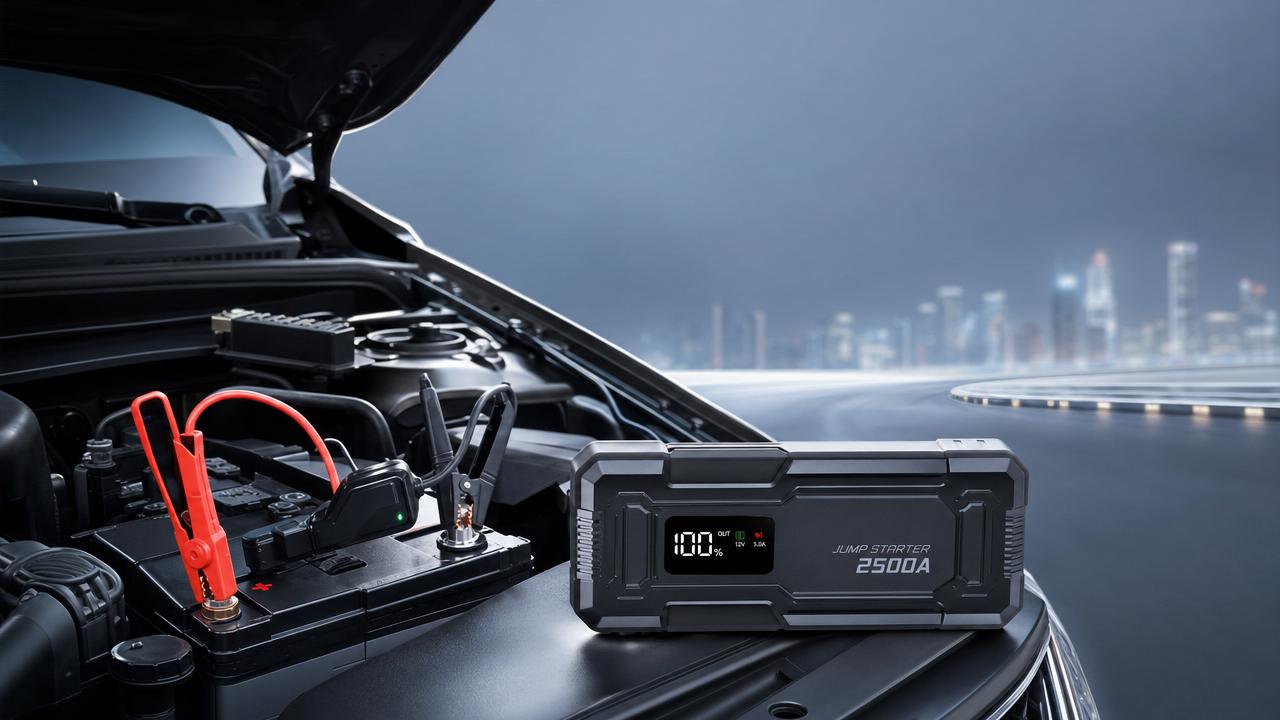
From unexpected dead batteries to heavier use of onboard electronics, many drivers now view Jump Starters & Battery Boosters differently than they did a few years ago.
What was once a niche emergency tool is becoming relevant in daily travel, outdoor driving, delivery work, and long-distance commuting.
The real question is not whether every vehicle must carry one, but which driving scenarios make Jump Starters & Battery Boosters a practical standard.
That judgment matters for safety, travel continuity, and cost control. It also shapes how compact power products are designed, manufactured, and customized for real-world use.
Why the “optional accessory” label no longer fits every driving situation
Vehicle dependence has changed. Drivers rely on screens, cameras, trackers, charging ports, and idle-time electronics more than ever before.
At the same time, many trips happen under time pressure. Waiting for roadside assistance is often more disruptive than the battery issue itself.
This is why Jump Starters & Battery Boosters are gaining value. They reduce downtime, improve self-reliance, and offer immediate recovery in common low-battery situations.
They also suit modern expectations. People increasingly want compact tools that are easy to store, quick to use, and ready without depending on another vehicle.
The shift is driven by scenario, not hype
Not every car owner faces the same risk level. A lightly used city car and a frequently parked service vehicle have very different battery profiles.
So the rise of Jump Starters & Battery Boosters should be judged by use case, parking conditions, climate, and tolerance for interruption.
Scenario one: urban commuting with frequent short trips
Short urban trips can slowly weaken a battery. The alternator may not fully recharge it between starts, especially in traffic-heavy conditions.
Add winter temperatures, dashboard electronics, and phone charging, and a routine commute can become an unexpected no-start morning.
In this scenario, Jump Starters & Battery Boosters act as a time-saving backup. They are less about adventure and more about preventing schedule disruption.
Core judgment point
If a vehicle is often used for short distances and parked overnight outdoors, carrying a portable jump starter becomes a sensible precaution.
Scenario two: vehicles parked for long periods
Some cars are not driven daily. Weekend vehicles, secondary household cars, and seasonal-use vehicles commonly face battery drain during idle periods.
Parasitic draw from alarms, sensors, and connected systems can slowly reduce charge even when the engine is off.
For these cases, Jump Starters & Battery Boosters are highly practical. They provide independence when the battery underperforms after sitting unused.
This use case especially matters in garages, apartment parking lots, and remote parking areas where instant assistance may not be available.
Core judgment point
If the vehicle sits for days or weeks at a time, a battery booster moves closer to essential than optional.
Scenario three: outdoor travel, road trips, and remote routes
Distance changes risk. A dead battery in a city may be inconvenient, but a dead battery in a rural area can become a safety issue.
Campers, road trippers, and drivers on low-service routes often use more accessories and spend longer periods away from immediate support.
Here, Jump Starters & Battery Boosters provide more than convenience. They support route continuity and reduce dependence on mobile network coverage or nearby traffic.
Many compact models also include USB charging, lighting, and protection features, making them useful beyond a single jump-start event.
Core judgment point
If the route includes isolated areas, bad weather exposure, or overnight stays, carrying Jump Starters & Battery Boosters is a strong risk-control measure.
Scenario four: work vehicles and time-sensitive mobility
Some vehicles are linked directly to daily income or tightly planned movement. Delays create costs quickly.
Frequent engine restarts, accessory use, and high daily mileage can all increase battery stress in operational settings.
In these situations, Jump Starters & Battery Boosters function as continuity tools. They help restore operation fast and avoid service interruptions.
This is also where product quality matters most. Reliability, safety protection, and stable output become more important than low upfront price alone.
How demand changes across driving scenarios
The need for Jump Starters & Battery Boosters is not uniform. The table below shows how scenario differences affect buying logic.
How to decide whether a jump starter fits the scenario
A useful decision starts with conditions, not marketing claims. These checks help determine whether Jump Starters & Battery Boosters should be part of the vehicle kit.
- The car is parked outdoors in winter or extreme temperatures.
- Trips are usually short and the battery rarely gets a full recharge.
- The vehicle may remain unused for several days or longer.
- Travel often includes remote roads or poor mobile coverage.
- A delayed restart would cause missed appointments or financial loss.
- The driver prefers self-service emergency recovery over roadside waiting.
If several points apply, Jump Starters & Battery Boosters are no longer a luxury purchase. They become a practical preparedness tool.
Common mistakes when judging the real need
One common mistake is assuming a newer car does not need backup power. Newer vehicles often carry more electronic load, not less.
Another mistake is treating roadside assistance as a complete substitute. It helps, but response time may not match urgent schedules or remote conditions.
Some also buy only by peak current labels. In reality, safety design, battery cell quality, clamp protection, and durability matter just as much.
A final oversight is ignoring storage readiness. Jump Starters & Battery Boosters must hold charge well and remain reliable after time in the trunk.
Why manufacturing capability affects real-world reliability
As demand rises, product consistency becomes critical. A jump starter is judged in one moment: when the vehicle fails to start.
That is why integrated development and controlled production matter. Stable assembly, tested components, and responsive customization improve field performance.
Qingdao Shinod Intelligent Technology Co., Ltd. brings over 10 years of smart technology manufacturing experience to this kind of product category.
With a 5,000㎡ facility, 40 skilled employees, and 30 production machines, the company supports efficient, standardized output and dependable delivery schedules.
Its integrated chain covers R&D, mold design, and mass production without outsourcing. That helps control cost, lead time, and product consistency.
For scenario-driven products like Jump Starters & Battery Boosters, that manufacturing structure supports better customization and more reliable execution.
Actionable next steps for choosing the right preparedness level
Start by reviewing actual driving habits rather than ideal ones. The right answer depends on usage pattern, climate, and interruption risk.
- List how often the vehicle sits unused and how often trips are short.
- Check whether routes include isolated parking, travel, or harsh weather.
- Estimate the cost of one failed start in time, inconvenience, or safety exposure.
- Choose Jump Starters & Battery Boosters with reliable protection, compact storage, and suitable output.
- Work with a capable production partner if customization, stable supply, or drop-shipping support is needed.
So, are Jump Starters & Battery Boosters becoming a standard car essential? In many real scenarios, yes.
They may not be mandatory for every vehicle, but they are increasingly standard where battery uncertainty meets schedule pressure, distance, or safety concerns.
When the scenario demands fast recovery and self-reliance, keeping Jump Starters & Battery Boosters on hand is a practical, modern decision.
Please give us a message