
News
- ▶ Are Jump Starters & Battery Boosters Becoming a Standard Car Essential?
- ▶ Jump Starters & Battery Boosters Demand Outlook for the Next Sales Cycle
- ▶ What Recent Battery Failures Reveal About Jump Starters & Battery Boosters
- ▶ Jump Starters & Battery Boosters: New Standards Changing Product Reviews
- ▶ 2026 Price Pressure in Jump Starters & Battery Boosters Supply
Message
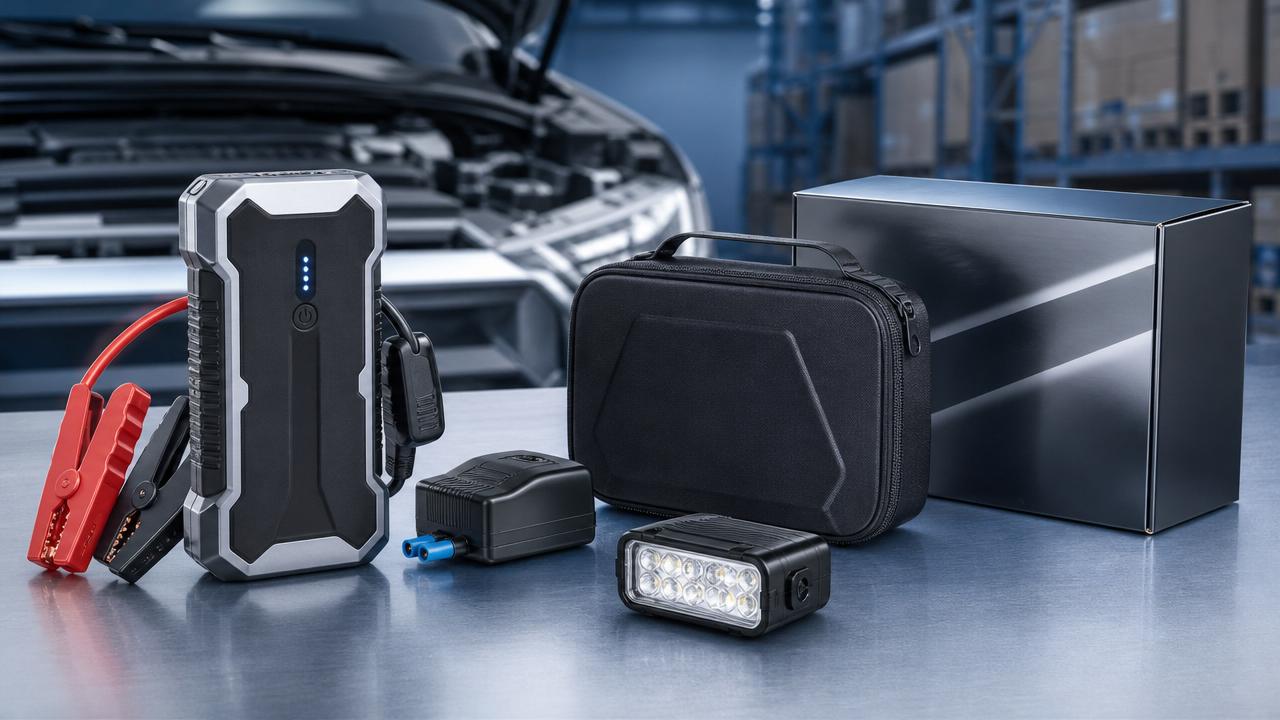
As buyers plan the next sales cycle, demand for Jump Starters & Battery Boosters is expected to remain strong, driven by vehicle emergency needs, seasonal mobility trends, and growing interest in reliable portable power. For business evaluators, understanding supply stability, customization capacity, and cost control will be key to selecting manufacturing partners that can support both market responsiveness and long-term profitability.
What Is Driving the Next Sales Cycle for Jump Starters & Battery Boosters?
Jump Starters & Battery Boosters are no longer viewed only as emergency automotive accessories. They are now part of a broader portable power category serving drivers, fleet operators, roadside support teams, outdoor users, and e-commerce buyers seeking practical, high-utility devices.
For business evaluators, the outlook is attractive because demand is supported by repeat market triggers rather than a single trend. Dead batteries remain common. Seasonal temperature shifts affect battery performance. Consumers also want compact devices that combine safety, convenience, and multi-function charging.
The purchasing challenge is not whether the category has demand. The real question is whether a supplier can deliver the right mix of product consistency, customization flexibility, and stable lead times when replenishment pressure rises.
- Vehicle emergency readiness continues to drive baseline demand across retail, wholesale, and fleet channels.
- Portable power expectations are expanding, pushing buyers toward models with USB charging, lighting, and safety protections.
- Cross-border sales cycles favor suppliers that can support private labeling, packaging adaptation, and responsive production planning.
Why demand remains resilient
Unlike purely seasonal gadgets, Jump Starters & Battery Boosters solve a real operational problem. A failed vehicle start creates immediate inconvenience and, in commercial settings, lost time. That makes the category easier to justify for distributors and platform sellers focused on practical products with clear use cases.
Another factor is giftability and preparedness buying. In many markets, end users purchase jump starters before winter travel, road trips, or long commutes. This creates predictable waves in demand that buyers can plan for if their manufacturing partner offers dependable scheduling.
Which application scenarios matter most when evaluating product potential?
Different sales channels require different product positioning. A compact model for online retail may not match the needs of a fleet distributor. Business evaluators should map application scenarios first, then align specifications, packaging, and price architecture to each segment.
The table below summarizes common use scenarios for Jump Starters & Battery Boosters and the purchasing implications behind each one.
This comparison shows why a one-size-fits-all sourcing approach often fails. Commercial users prioritize durability and output confidence, while online consumer channels care more about form factor, usability, and perceived value. Matching these variables early reduces misalignment and return risk.
How scenario-based planning improves margin control
When buyers define the target use case first, they avoid over-specifying products that erode margins or under-specifying products that create warranty pressure. This is especially important for Jump Starters & Battery Boosters, where small changes in battery capacity, clamp design, or protective functions can shift both cost and market positioning.
What should business evaluators check in product specifications?
Technical review should focus on suitability, not only headline numbers. A product can look attractive on paper but still be weak in consistency, safety integration, or real-world usability. Business evaluators should ask whether specifications reflect the target vehicle range and selling channel.
Key specification areas
- Battery capacity and output level should match expected engine categories and use frequency.
- Protection functions such as reverse polarity, overcurrent, overcharge, and short-circuit safeguards help reduce user error risks.
- Clamp quality, cable durability, and enclosure construction affect reliability more than promotional feature lists suggest.
- Additional outputs, indicators, and emergency lighting can raise perceived value but should not compromise core starting performance.
For procurement teams, documentation matters as much as hardware. Clear specification sheets, packaging details, accessory lists, and production consistency records help prevent disputes during sample confirmation and mass delivery stages.
Specification review table for Jump Starters & Battery Boosters
The following table can be used as a practical review tool when comparing Jump Starters & Battery Boosters from different suppliers.
A structured checklist like this helps evaluators compare suppliers on operational fit instead of relying only on brochure claims. It also makes internal approval easier because technical and commercial concerns are reviewed together.
How do supply stability and customization affect procurement decisions?
In the next sales cycle, procurement risk will often come from execution gaps rather than market demand. Buyers may secure strong product concepts but still lose opportunities if a supplier cannot hold quality, react to packaging changes, or deliver on time during peak periods.
Qingdao Shinod Intelligent Technology Co., Ltd. addresses this concern through a manufacturing structure built for control. With more than 10 years of smart technology production experience, a 5,000 square meter facility, 40 skilled employees, and 30 sets of machinery, the company operates with visible production capacity rather than a trading-only model.
Its fully integrated production chain is especially relevant for Jump Starters & Battery Boosters. By covering R&D, mold design, and mass production without outsourcing, the company can respond more directly to custom feature requests, appearance changes, accessory adjustments, and packaging requirements while managing lead time and cost exposure more tightly.
Why this matters to business evaluators
- Integrated production improves visibility. Evaluators can assess where design, tooling, and assembly decisions are made.
- Reduced outsourcing can help control communication delays and quality variance across project stages.
- Customization becomes more practical when mold, production, and service coordination are handled within one system.
- Flexible business support, including domestic supply and cross-border drop-shipping, gives buyers more channel options.
How should buyers compare cost, value, and alternatives?
Price comparison alone is a weak purchasing method for Jump Starters & Battery Boosters. Lower unit pricing may hide higher accessory failure rates, inconsistent packaging execution, or costly after-sales friction. A better approach is to compare total commercial value across the full supply cycle.
The table below highlights common sourcing choices and the trade-offs buyers should consider before approving a supplier.
For evaluators under budget pressure, the goal is not the cheapest invoice. It is a sourcing structure that protects sell-through, reduces return exposure, and supports future replenishment. In many cases, a stable integrated manufacturer provides better long-term margin protection than a lower upfront quote.
Cost factors buyers often overlook
- Packaging revisions requested late in the cycle can affect both lead time and rework cost.
- Accessory quality, especially clamps and cables, can influence complaint rates more than expected.
- Insufficient documentation may slow customs, retail onboarding, or platform listing approval.
What about compliance, documentation, and risk control?
Business evaluators should treat compliance as part of commercial feasibility, not an afterthought. Requirements vary by target market and channel, but buyers generally need clarity on labeling, battery transport considerations, user instructions, and any applicable product safety documentation.
For Jump Starters & Battery Boosters, it is wise to confirm early whether the supplier can support documentation review, packaging adaptation, and technical file preparation appropriate to the destination market. Even when specific certifications are not yet fixed, a supplier’s ability to work within standard compliance workflows is valuable.
Practical risk-control checklist
- Confirm target market requirements before packaging is finalized.
- Request clear accessory lists, carton details, and instruction content for approval.
- Check whether sample specifications match planned mass production configuration.
- Build extra time into first-order scheduling when customized design or labeling is involved.
FAQ: What do buyers often ask before selecting Jump Starters & Battery Boosters?
How do I choose the right Jump Starters & Battery Boosters for my sales channel?
Start with the end user and channel format. Consumer online channels often favor compact designs, clear feature communication, and attractive bundles. Fleet, workshop, or roadside channels usually require stronger output confidence, more durable accessories, and stable repeat-order quality. Product fit should guide pricing and packaging decisions.
What procurement mistakes are most common?
The most common mistakes are buying on headline specs only, ignoring accessory quality, and underestimating packaging or compliance lead times. Another frequent issue is treating all Jump Starters & Battery Boosters as interchangeable, when actual use cases differ significantly across regions and channels.
Why is integrated manufacturing important for customized orders?
Integrated manufacturing helps align engineering, tooling, production, and service communication. That becomes important when you need brand-specific packaging, product appearance changes, accessory adjustments, or cost optimization. Fewer handoff points usually mean clearer accountability and better schedule control.
Are Jump Starters & Battery Boosters suitable for cross-border drop-shipping models?
They can be, provided the supplier supports flexible order handling, packaging coordination, and documentation management. This is where a manufacturer with both domestic supply capability and cross-border drop-shipping support can offer practical advantages to buyers testing new markets or smaller-volume channels.
Why choose us for the next sales cycle?
For business evaluators sourcing Jump Starters & Battery Boosters, the real value lies in controllable execution. Qingdao Shinod Intelligent Technology Co., Ltd. combines more than a decade of smart technology manufacturing experience with a 5,000 square meter facility, 40 skilled employees, and 30 production machines to support stable output and dependable delivery planning.
Because our production chain covers R&D, mold design, and mass production without outsourcing, we can work more efficiently on custom requirements while helping buyers manage cost and lead time. This is particularly useful when you need market-specific packaging, feature adjustments, or a clearer balance between target price and product configuration.
If you are reviewing suppliers for the next sales cycle, you can contact us to discuss specification confirmation, product selection, customization options, sampling support, expected delivery schedules, packaging adaptation, and quotation planning. That gives your team a more practical basis for evaluating whether the proposed Jump Starters & Battery Boosters program fits your sales goals and procurement standards.
Please give us a message