
News
- ▶ Are Jump Starters & Battery Boosters Becoming a Standard Car Essential?
- ▶ Jump Starters & Battery Boosters Demand Outlook for the Next Sales Cycle
- ▶ What Recent Battery Failures Reveal About Jump Starters & Battery Boosters
- ▶ Jump Starters & Battery Boosters: New Standards Changing Product Reviews
- ▶ 2026 Price Pressure in Jump Starters & Battery Boosters Supply
Message
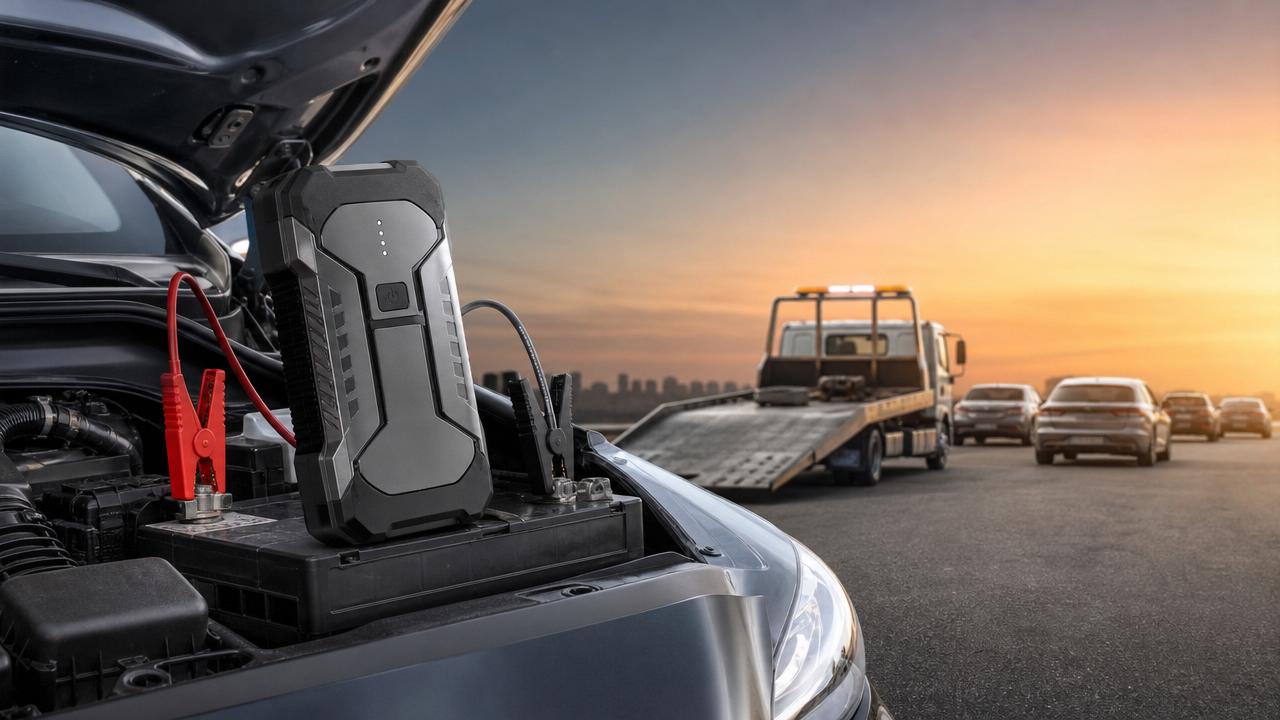
Recent battery failures are exposing weak points across modern vehicle power systems. That shift is making Jump Starters & Battery Boosters a practical necessity, not just an emergency accessory.
Unexpected voltage drops, damaged cells, and failed starts now appear in passenger cars, fleet vehicles, service vans, and equipment used in remote work conditions.
These incidents reveal a clear pattern. When onboard batteries become less predictable, after-sales support depends on faster, safer, and smarter backup power solutions.
That is why Jump Starters & Battery Boosters are gaining strategic importance. They reduce downtime, improve field response, and support maintenance teams facing tighter service windows.
Battery Failure Trends Are Becoming Harder to Ignore
Recent failures are not isolated events. They point to broader stress across batteries, charging systems, and electrical loads in both traditional and newer vehicle platforms.
Vehicles now carry more sensors, displays, communication modules, and standby functions. Even when engines are off, parasitic drain can shorten battery readiness.
At the same time, irregular driving patterns worsen battery health. Short trips, long parking periods, and climate extremes accelerate sulfation, imbalance, and reserve capacity loss.
This combination changes service expectations. A simple jump is no longer enough. Teams need Jump Starters & Battery Boosters that deliver controlled power under varied conditions.
Key Signals Behind the Growing Demand
- More battery complaints are linked to intermittent starts rather than complete battery death.
- Field technicians increasingly face batteries with enough voltage to mislead, but not enough cranking power.
- Cold weather and heat exposure are causing steeper performance drops than many operators expect.
- Service response times are under pressure, raising the value of portable Jump Starters & Battery Boosters.
What Recent Failures Reveal About System Weaknesses
Battery failures often reveal deeper issues than a discharged unit. They expose how little margin exists inside today’s electrical systems during real operating stress.
In many cases, the battery is only the first visible failure point. Corroded terminals, unstable alternator output, and hidden current draw often sit behind the incident.
For that reason, Jump Starters & Battery Boosters must support diagnosis as well as restart. Stable delivery and protection logic matter as much as peak current claims.
Common Failure Patterns Seen in the Field
Why These Trends Are Reshaping Requirements for Jump Starters & Battery Boosters
The old selection logic focused on maximum peak amps. Current conditions require a broader view, including stability, protection, portability, recharge speed, and product reliability.
As battery incidents become more complex, Jump Starters & Battery Boosters must perform well in uncertain environments, not just in ideal workshop demonstrations.
Main Drivers Behind the Upgrade in Demand
- Higher onboard electrical loads require stronger and more stable support during starting events.
- Mixed vehicle usage patterns increase the chance of hidden battery weakness.
- Remote service tasks favor compact tools with fast readiness and simple operation.
- Safety expectations now emphasize reverse polarity, short-circuit, overcurrent, and overtemperature protection.
- Cross-border supply chains need dependable manufacturing and consistent quality control.
This is where production capability matters. Qingdao Shinod Intelligent Technology Co., Ltd. brings over 10 years of smart technology manufacturing experience to this category.
Its 5,000㎡ facility, 40 skilled employees, and 30 sets of machinery support stable output and repeatable quality for power-related smart products.
A fully integrated chain, from R&D and mold design to mass production, helps control cost, lead time, and customization accuracy without outsourcing.
The Impact Extends Across Service Readiness and Operational Risk
Battery failure trends affect more than roadside starts. They influence service scheduling, technician safety, customer satisfaction, and the overall predictability of maintenance operations.
When reliable Jump Starters & Battery Boosters are unavailable, even minor battery issues can trigger delays, towing costs, and repeated service calls.
Areas Most Affected
- Field maintenance: slower recovery when equipment cannot restart immediately.
- Mobile service units: higher pressure to carry compact, multi-protection backup power.
- Vehicle care programs: more battery checks are needed before failures escalate.
- Emergency support: safer operation becomes essential in low-light or harsh weather conditions.
The result is a shift from reactive tool buying to preparedness planning. Jump Starters & Battery Boosters are increasingly treated as uptime tools.
What Deserves Closer Attention When Evaluating Solutions
Not all backup devices respond equally to real battery failure scenarios. Selection should reflect actual failure patterns, usage frequency, storage conditions, and operational risk.
Core Points to Review
- Starting performance under low-temperature and low-voltage conditions.
- Protection design against reverse connection and overload events.
- Battery chemistry stability, recharge efficiency, and standby retention.
- Clamp durability, cable quality, and enclosure toughness for field use.
- Manufacturing consistency and the ability to support custom specifications.
- Supply flexibility for domestic distribution or cross-border drop-shipping.
These factors explain why sourcing decisions increasingly favor experienced partners with stable capacity and a complete service system.
A Practical Response Starts With Better Preparedness
The best response to rising battery failure risk is structured readiness. That means combining smarter inspection routines with dependable Jump Starters & Battery Boosters.
Recommended Response Framework
Preparation also means matching product design to application reality. Compact storage, intuitive interfaces, and dependable electronics often matter more than exaggerated specifications.
What the Next Stage Likely Looks Like
Battery failures will likely remain a recurring challenge as electrical complexity grows and usage patterns stay uneven. That keeps demand for Jump Starters & Battery Boosters on a steady upward path.
The most useful solutions will combine portability, protection, stable output, and dependable manufacturing support. In this category, consistency matters more than marketing claims.
Qingdao Shinod Intelligent Technology Co., Ltd. offers a manufacturing foundation aligned with these needs, including integrated development, efficient production, and flexible fulfillment support.
If recent battery failures are revealing weak links, the next step is clear. Review current readiness, tighten battery response plans, and choose Jump Starters & Battery Boosters built for real field demands.
Please give us a message