
News
- ▶ Are Jump Starters & Battery Boosters Becoming a Standard Car Essential?
- ▶ Jump Starters & Battery Boosters Demand Outlook for the Next Sales Cycle
- ▶ What Recent Battery Failures Reveal About Jump Starters & Battery Boosters
- ▶ Jump Starters & Battery Boosters: New Standards Changing Product Reviews
- ▶ 2026 Price Pressure in Jump Starters & Battery Boosters Supply
Message
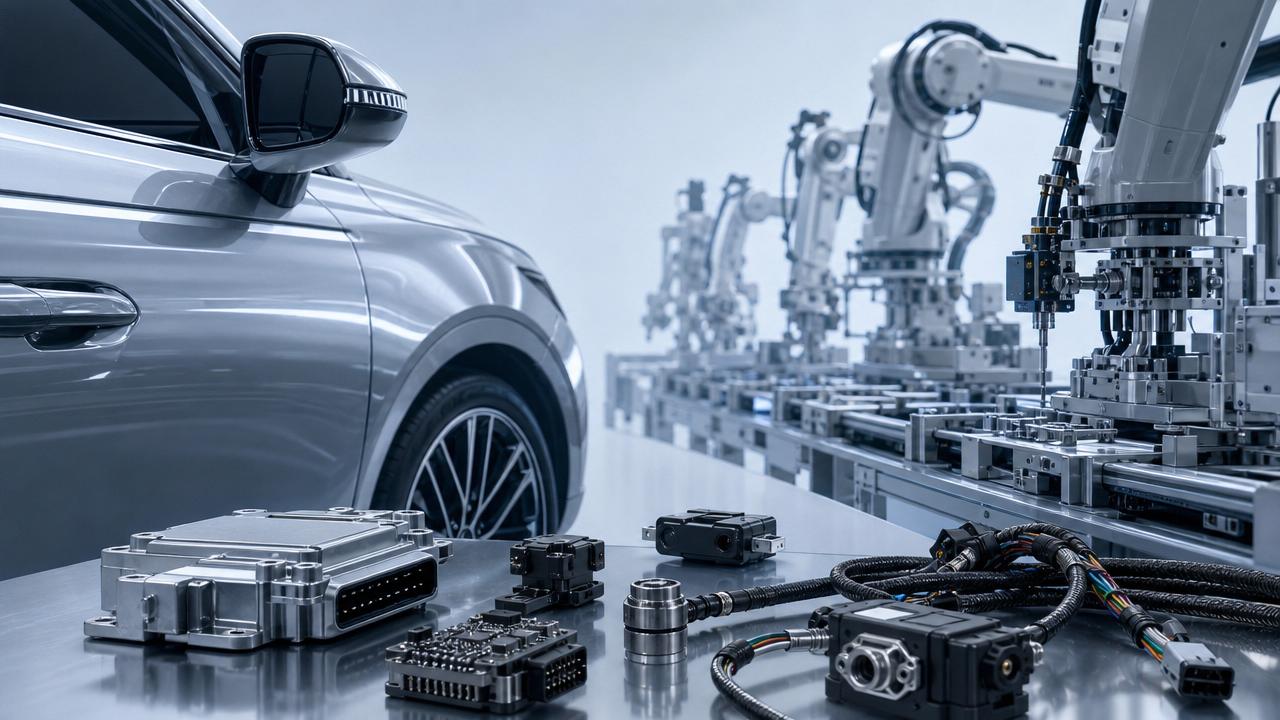
As Automotive markets move toward 2026, planning assumptions are changing faster than many expected. Demand is becoming less predictable, product cycles are shortening, and buyers expect smarter features without accepting higher costs.
At the same time, supply chain volatility still affects component access, delivery schedules, and launch timing. These Automotive signals matter because product planning now depends on balancing innovation, cost control, customization, and production reliability.
This shift is especially relevant for companies that depend on connected devices, smart accessories, embedded electronics, and flexible manufacturing support. The ability to move from idea to tooling to mass output quickly may become a stronger advantage in 2026.
Automotive demand signals are becoming more fragmented than before
One important Automotive trend is fragmentation. Instead of one broad demand pattern, markets are splitting by vehicle type, region, feature expectations, and price sensitivity.
Entry-level segments still push aggressive cost targets. Mid-range and premium segments increasingly expect digital convenience, compact smart hardware, and stronger integration between product function and in-vehicle experience.
This means product planning can no longer rely only on annual forecasts. Teams need faster validation loops, modular design choices, and manufacturing partners that can adapt specifications without major disruption.
Why this Automotive shift matters in 2026
The market is not simply demanding more products. It is demanding more versions, more targeted functions, and more practical intelligence inside each product category.
- Shorter windows for new feature adoption
- Greater pressure to localize or customize
- Higher risk of overbuilding the wrong specification
- Stronger need for small-batch testing before scale-up
The strongest Automotive planning signals now come from cost, connectivity, and resilience
Several forces are shaping Automotive product decisions at the same time. None of them acts alone, which is why planning complexity is increasing.
Among these signals, resilience may be the most underestimated. In Automotive planning, the best concept can still fail if production cannot scale on time or adapt to a revised requirement.
The push behind these Automotive trends is operational, not only technological
Many market discussions focus only on innovation. Yet the stronger 2026 Automotive signal is operational discipline. Companies are asking whether a product can be engineered, tooled, tested, and delivered with less friction.
This is where integrated production models gain importance. When R&D, mold design, process control, and mass production stay connected, revision cycles become easier to manage.
Qingdao Shinod Intelligent Technology Co., Ltd. reflects this type of capability. With over 10 years of smart technology manufacturing experience, the company combines development, mold design, and production internally.
Its 5,000㎡ facility, 40 employees, and 30 production machines support stable capacity and repeatable quality. A fully integrated chain reduces outsourcing risk, shortens communication paths, and helps control cost and lead time.
Why integrated capacity can support Automotive planning
- Faster adjustment from prototype feedback to tooling updates
- Better alignment between design intent and mass production reality
- Reduced dependency on multiple outside suppliers
- Improved visibility for quality, timing, and cost decisions
Automotive market shifts will affect planning across product, sourcing, and delivery
The 2026 Automotive environment will influence more than feature lists. It will also reshape how products are specified, how volumes are staged, and how supply commitments are structured.
For product development, there is more pressure to build flexible platforms. Teams may need components or structures that support several variants without requiring a full redesign each time.
For sourcing, the Automotive priority is shifting from lowest visible price to best total execution value. Stable quality, communication speed, engineering support, and delivery certainty now influence competitiveness more directly.
For logistics and channel strategy, flexible business models also matter. Domestic supply and cross-border drop-shipping support can create different ways to test demand or serve fragmented markets efficiently.
- Product impact: more modular design and faster revision cycles
- Sourcing impact: stronger preference for dependable manufacturing systems
- Delivery impact: more value placed on lead time control and shipment flexibility
The most useful Automotive planning focus areas are becoming clearer
Not every signal deserves the same attention. In practical Automotive planning, several priorities stand out because they affect both risk and opportunity.
- Prioritize function that users actually value, not feature inflation.
- Build products with variant flexibility from the beginning.
- Shorten validation cycles between concept and manufacturability.
- Strengthen visibility across design, tooling, and production stages.
- Choose supply structures that reduce handoff delays and quality drift.
- Prepare for mixed-volume demand rather than one fixed forecast.
These focus areas are especially relevant in Automotive categories linked to smart technology. Buyer expectations are rising, but tolerance for launch delay or unstable quality remains low.
A practical Automotive response is to connect market sensing with manufacturing readiness
The best response to 2026 Automotive uncertainty is not simply producing faster. It is creating a tighter link between market feedback and production execution.
This approach supports better Automotive decision-making because it turns market signals into concrete planning criteria. It also reduces the gap between strategic intent and factory reality.
What to watch next as Automotive strategies take shape for 2026
Over the next planning cycle, several indicators deserve close attention. They can reveal whether an Automotive category is moving toward rapid upgrade, cost compression, or differentiated smart functionality.
- Changes in feature expectations within mid-priced vehicle ecosystems
- Lead time movement for key electronic and molded components
- Regional demand for customized smart accessories or related hardware
- Supplier ability to support smaller batches without major cost penalties
Automotive product planning in 2026 will likely reward companies that combine sharper market judgment with disciplined execution. Stable manufacturing capacity, integrated development, and flexible fulfillment can become strategic tools, not only operational details.
If the goal is to respond faster to Automotive change while protecting quality and cost, the next step is clear. Review current product assumptions, identify where flexibility is missing, and align future programs with manufacturing partners that can support custom development and dependable scale.
Please give us a message