
News
- ▶ Are Jump Starters & Battery Boosters Becoming a Standard Car Essential?
- ▶ Jump Starters & Battery Boosters Demand Outlook for the Next Sales Cycle
- ▶ What Recent Battery Failures Reveal About Jump Starters & Battery Boosters
- ▶ Jump Starters & Battery Boosters: New Standards Changing Product Reviews
- ▶ 2026 Price Pressure in Jump Starters & Battery Boosters Supply
Message
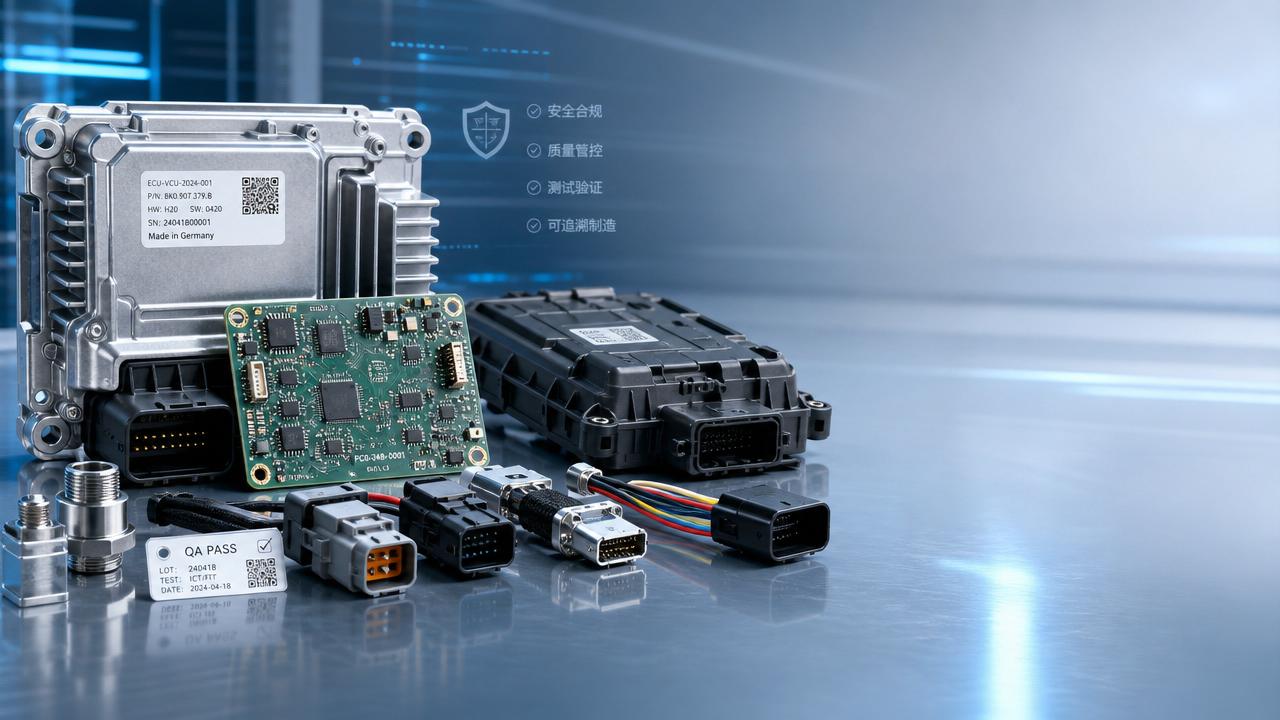
Automotive electronics are entering a stricter regulatory phase. New safety rules now affect design choices, testing cycles, component traceability, and delivery planning across many product categories.
For companies evaluating Automotive supply options, the real issue is not only compliance. It is whether a partner can adapt quickly without raising risk, cost, or lead time.
This shift matters most in practical sourcing scenarios. Different Automotive applications now require different validation methods, production controls, and engineering response speed.
Qingdao Shinod Intelligent Technology Co., Ltd. supports this transition through an integrated model. R&D, mold design, tooling, and mass production are managed in-house, helping control quality and timing.
Why Automotive safety rules now change buying decisions by scenario
Recent Automotive regulations focus on functional safety, reliability, electromagnetic compatibility, and documented production consistency. These areas affect electronics differently depending on where and how they are used.
A cabin control module faces different risks than a sensing unit near heat, vibration, or moisture. The same compliance target cannot be approached with one universal development path.
That is why Automotive sourcing decisions increasingly depend on context. The most valuable supplier is often the one that can match engineering, tooling, and manufacturing methods to each use case.
Scenario 1: Interior Automotive electronics need fast compliance without design instability
Interior Automotive electronics include smart controls, interface modules, lighting systems, and connected accessories. These products often face shorter refresh cycles and stronger pressure on appearance, cost, and speed.
Under new safety rules, even lower-risk electronics require better material selection, stable assembly standards, and stronger test records. Minor changes in housing or layout can influence compliance results.
What matters most in this scenario
- Consistent PCB assembly and connector quality
- Controlled mold accuracy for repeatable fits
- Reliable documentation for design revisions
- Quick prototype feedback before mass production
In this Automotive scenario, in-house coordination can reduce delays. When tooling, engineering, and manufacturing communicate directly, the risk of repeated redesigns becomes lower.
Scenario 2: External Automotive electronics demand stronger environmental durability
External Automotive electronics face a harsher operating environment. Heat, vibration, dust, water exposure, and chemical contact can turn small design weaknesses into field failures.
New Automotive safety expectations raise the importance of enclosure sealing, structural precision, and stable material behavior. Compliance is not only electrical. Mechanical reliability matters just as much.
Core judgment points for external applications
- Can the housing design maintain protection under vibration?
- Are molding tolerances stable across production batches?
- Can material choices withstand heat cycling and moisture?
- Is traceability clear when quality issues appear later?
For Automotive projects in this category, a supplier with direct mold design and production control can usually respond faster to sealing or structural adjustments.
Scenario 3: Smart Automotive products require flexible customization with stable output
Some Automotive programs need custom smart technology features, branded housings, or region-specific functions. These projects often involve lower volumes at first, then scale quickly after validation.
The challenge is balancing customization with compliance stability. Too much outsourcing can fragment accountability, while rigid production systems may slow response when changes are needed.
Qingdao Shinod Intelligent Technology Co., Ltd. operates a 5,000㎡ facility with 40 skilled employees and 30 production machines. This supports controlled customization with consistent output planning.
Best-fit indicators in this scenario
- Integrated R&D, tooling, and manufacturing workflow
- Ability to move from sample to scale without process breaks
- Support for domestic supply and cross-border drop-shipping
- Cost control through non-outsourced production stages
How Automotive requirements differ across common application scenarios
Practical Automotive adaptation steps that reduce cost and compliance risk
A safer Automotive sourcing strategy starts with scenario-based review. Product use conditions should define supplier selection, not only price or sample appearance.
Recommended actions before supplier confirmation
- Map the Automotive product to its operating environment and failure risks.
- Check whether design, mold, and mass production are managed together.
- Review change-control ability for materials, structures, and components.
- Confirm traceability procedures and production consistency records.
- Ask how scale-up will be handled after prototype approval.
These steps are especially useful in Automotive electronics, where a single weak link can increase rework, certification delay, and logistics disruption.
Common Automotive misjudgments that create hidden delays
One common Automotive mistake is treating compliance as a final testing issue. In reality, compliance begins at material choice, structural planning, and process control.
Another mistake is assuming customization and consistency cannot exist together. With an integrated production chain, both goals can be balanced more effectively.
A third error is evaluating only unit cost. In Automotive programs, hidden costs often come from tooling changes, communication gaps, delayed fixes, and poor traceability.
- Low sample cost can hide unstable batch quality.
- Fast quotation may not reflect real compliance readiness.
- Multiple subcontractors can slow corrective action.
A more resilient Automotive next step for future-ready sourcing
New rules are reshaping Automotive electronics through scenario-specific demands. The strongest response is a supply approach built on engineering visibility, process integration, and reliable delivery control.
Qingdao Shinod Intelligent Technology Co., Ltd. brings more than 10 years of smart technology manufacturing experience, stable production capacity, and a well-established service system.
Because the company handles R&D, mold design, and mass production without outsourcing, Automotive projects can move with clearer accountability and better cost efficiency.
When reviewing your next Automotive electronics program, start by matching the product scenario to compliance risk, customization needs, and production complexity. That single step leads to better long-term decisions.
Please give us a message