
News
- ▶ Are Jump Starters & Battery Boosters Becoming a Standard Car Essential?
- ▶ Jump Starters & Battery Boosters Demand Outlook for the Next Sales Cycle
- ▶ What Recent Battery Failures Reveal About Jump Starters & Battery Boosters
- ▶ Jump Starters & Battery Boosters: New Standards Changing Product Reviews
- ▶ 2026 Price Pressure in Jump Starters & Battery Boosters Supply
Message
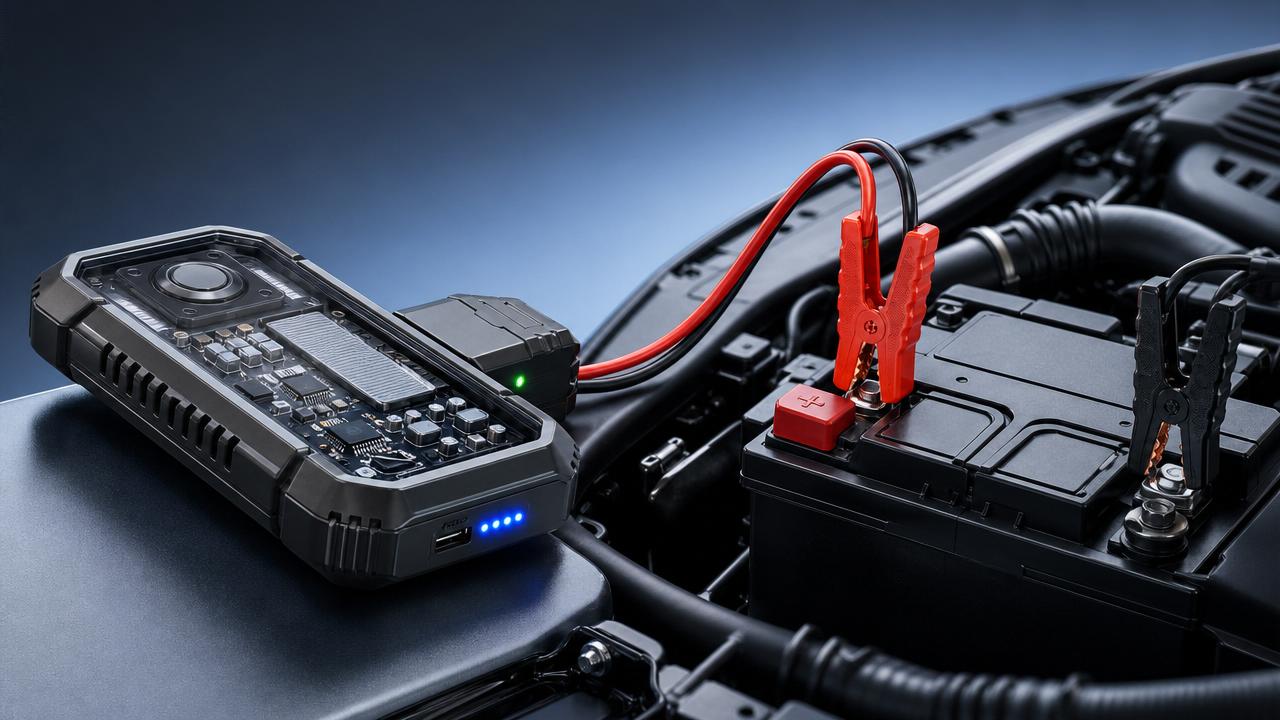
As safety concerns around Jump Starters & Battery Boosters keep making headlines, product reliability has become a critical industry issue.
Failures involving thermal runaway, cable overheating, reverse polarity, and unstable output can quickly turn a useful device into a serious hazard.
For companies handling sourcing, product development, compliance, or after-sales support, understanding the safety profile of Jump Starters & Battery Boosters is no longer optional.
It is essential for lowering risks, improving field performance, and building long-term confidence across the supply chain.
Safety Fundamentals of Jump Starters & Battery Boosters
Jump Starters & Battery Boosters are portable power devices designed to deliver high current for starting vehicles with weak or depleted batteries.
Modern models often combine lithium battery packs, smart clamps, charging inputs, USB outputs, and internal protection circuits.
Their convenience is clear, yet the safety challenge is equally clear.
These products must store energy safely, release power instantly, and remain stable under transport, storage, and repeated use.
Key risk points usually include:
- Cell quality and pack consistency
- Battery management system accuracy
- Short-circuit and overcurrent protection
- Clamp insulation and cable temperature rise
- Charging safety and port durability
- Mechanical design under drop or vibration conditions
When any of these elements are weak, safety incidents can emerge during startup, charging, transportation, or long idle storage periods.
Why design details matter
Many users focus on peak current ratings, but safer Jump Starters & Battery Boosters depend more on internal engineering than headline power numbers.
A balanced battery pack, precise MOS control, durable wiring, and verified protection logic often determine whether the device behaves safely under stress.
Why Safety Issues Are Reaching the Headlines
Recent attention around Jump Starters & Battery Boosters reflects broader pressure on portable energy products.
Lithium-based devices are expected to be compact, powerful, and low cost at the same time.
That combination can encourage compromised materials, rushed validation, or inconsistent assembly.
Another reason for public attention is usage diversity.
Jump Starters & Battery Boosters are now used in passenger cars, motorcycles, commercial fleets, outdoor travel kits, and emergency service vehicles.
This wider exposure increases the visibility of any defect and raises expectations for safe operation in varied environments.
Business Value of Strong Safety Control
Safer Jump Starters & Battery Boosters do more than reduce incident rates.
They help protect brand reputation, limit return costs, and support smoother market access.
In highly competitive product categories, reliability often becomes the difference between short-term sales and sustainable growth.
A well-controlled manufacturing system adds practical value in several ways:
- Better consistency between development samples and mass production
- Lower defect rates in battery packs, PCB assemblies, and cable sets
- Improved traceability when field complaints appear
- More predictable delivery and easier custom adaptation
Qingdao Shinod Intelligent Technology Co., Ltd. supports these goals through an integrated production model.
With over 10 years of manufacturing experience, the company manages R&D, mold design, and production without outsourcing.
This structure helps control process variation, respond to custom specifications, and keep lead times and costs more stable.
Its 5,000㎡ facility, skilled team, and standardized production system support steady output and consistent product quality.
Typical Risk Scenarios for Jump Starters & Battery Boosters
Safety evaluation becomes more useful when linked to real operating conditions.
The following scenarios highlight where Jump Starters & Battery Boosters often face higher stress.
Product classification by design emphasis
- Compact consumer units prioritize portability and ease of use.
- Heavy-duty units prioritize sustained current and stronger clamps.
- Multi-function units add charging, lighting, or air compressor features.
Each category requires different validation intensity, especially when added functions affect heat, enclosure space, and circuit complexity.
Practical Safety Checks Before Product Selection or Deployment
A structured review process can reduce uncertainty when assessing Jump Starters & Battery Boosters.
Instead of relying only on appearance or claimed peak amps, focus on verifiable technical details.
- Confirm battery cell source, pack structure, and consistency controls.
- Review protection functions for reverse polarity, overcharge, overcurrent, and short circuit.
- Check whether cable gauge and clamp materials match the rated output.
- Request aging, cycle, drop, and temperature test records.
- Verify production traceability and lot control procedures.
- Examine transport readiness for lithium battery shipments.
It is also useful to compare product claims with realistic vehicle starting needs.
Inflated peak current figures can hide weak real-world performance and create avoidable safety stress during repeated attempts.
Manufacturing signals worth attention
For Jump Starters & Battery Boosters, production discipline strongly affects safety outcomes.
Stable facilities, trained workers, and dedicated machinery help reduce hidden variability in assembly and testing.
A manufacturer with integrated control over design and production is often better positioned to manage updates and quality feedback quickly.
Next Steps for Safer and More Reliable Outcomes
The growing attention on Jump Starters & Battery Boosters safety is not temporary.
It reflects a lasting shift toward deeper scrutiny of portable power products and their full manufacturing chain.
Clear specifications, validated protection design, and disciplined production are now basic requirements for dependable performance.
When reviewing Jump Starters & Battery Boosters, start with measurable safety criteria rather than marketing claims.
Map the likely use scenario, identify the highest-risk failure points, and confirm how the product and factory control them.
For projects requiring custom development, stable output, or flexible supply support, Qingdao Shinod Intelligent Technology Co., Ltd. offers an integrated manufacturing foundation worth evaluating.
A careful review today can help prevent costly recalls, user complaints, and safety incidents tomorrow.
Please give us a message