
News
- ▶ Are Jump Starters & Battery Boosters Becoming a Standard Car Essential?
- ▶ Jump Starters & Battery Boosters Demand Outlook for the Next Sales Cycle
- ▶ What Recent Battery Failures Reveal About Jump Starters & Battery Boosters
- ▶ Jump Starters & Battery Boosters: New Standards Changing Product Reviews
- ▶ 2026 Price Pressure in Jump Starters & Battery Boosters Supply
Message
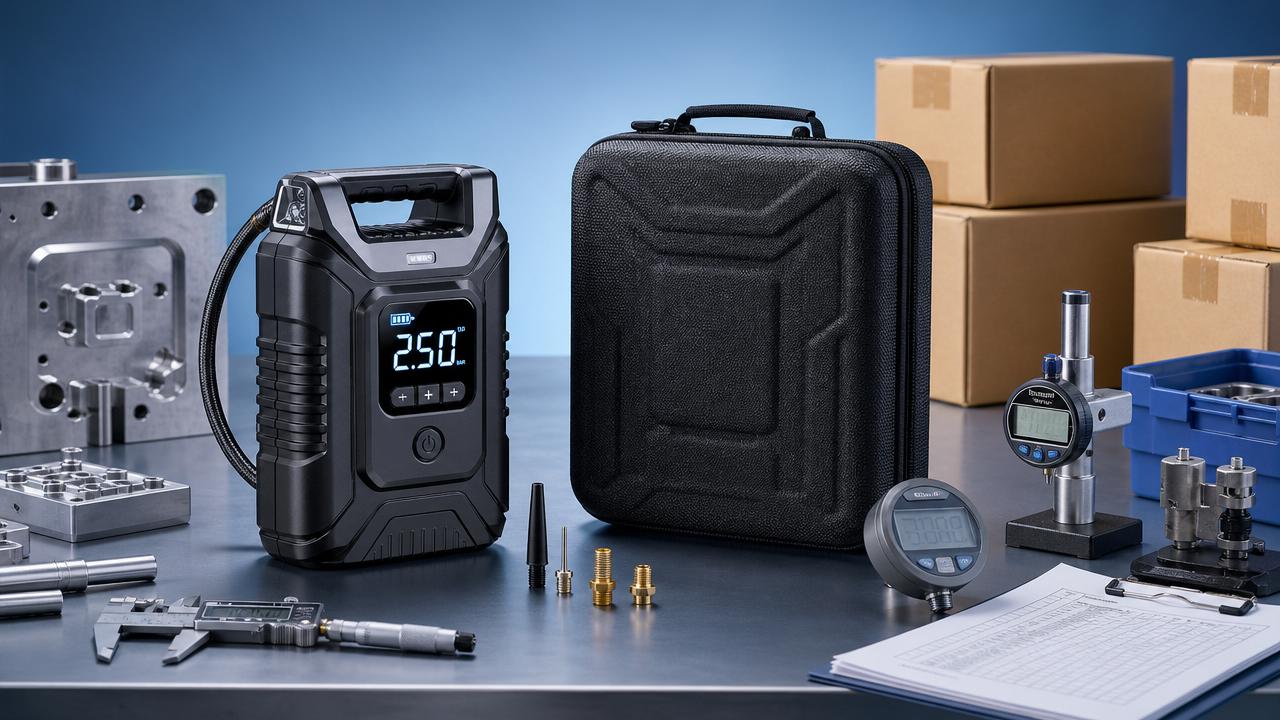
Why the Real Cost of an All-in-One Portable Tire Inflator Goes Beyond the Quote
When evaluating the real cost of an All-in-One Portable Tire Inflator, unit price is only the starting point.
Production consistency, customization depth, delivery reliability, and after-sales support often shape the final procurement outcome more than the first quotation.
A low initial price can still lead to higher replacement rates, delayed launches, unstable supply, and extra coordination costs.
For that reason, the best-value All-in-One Portable Tire Inflator is not always the cheapest one.
It is the product supported by dependable manufacturing, practical engineering, controllable lead times, and service systems that reduce hidden expenses over time.
Why a Structured Evaluation Is Necessary
An All-in-One Portable Tire Inflator combines electronics, battery systems, pressure control, housing parts, and packaging requirements in one product.
That means the real cost is influenced by more than assembly labor or raw materials.
A structured review helps compare suppliers on quality stability, integrated production strength, and long-term supply performance.
It also makes cost planning clearer when private label, function upgrades, or cross-border delivery models are involved.
Qingdao Shinod Intelligent Technology Co., Ltd. addresses these issues through in-house R&D, mold design, and mass production without outsourcing.
This integrated approach can help control quality variation, communication delays, and avoidable sourcing markups.
Key Factors That Affect the Real Cost of an All-in-One Portable Tire Inflator
- Check whether the All-in-One Portable Tire Inflator is produced through an integrated supply chain, because outsourced steps often increase delays, defects, and communication costs.
- Confirm production consistency across batches, since unstable inflation accuracy, battery performance, or casing fit can raise return rates and weaken brand trust.
- Review customization capability early, especially for housing design, packaging, accessories, firmware, and branding, because last-minute changes usually create tooling and timing costs.
- Evaluate mold development and engineering support, as strong in-house design can shorten product revisions and reduce expensive errors during launch preparation.
- Assess battery quality and safety control, because lower-grade cells may reduce runtime, increase complaints, and create hidden replacement or compliance expenses.
- Inspect testing standards for pressure accuracy, charging stability, noise, and durability, since inadequate testing often shifts quality cost to the buyer later.
- Ask about machinery capacity and workforce stability, because reliable output supports on-time delivery for both regular orders and seasonal demand spikes.
- Review packaging strength and shipment readiness, especially for cross-border distribution, where damage risk directly affects the real cost of an All-in-One Portable Tire Inflator.
- Compare lead time certainty instead of promised speed alone, because missed schedules can cost more than small unit-price differences during peak sales periods.
- Measure after-sales responsiveness, including spare parts, troubleshooting, and issue tracking, because service gaps often convert into refunds, reputation loss, and internal labor costs.
- Verify flexibility for domestic supply and drop-shipping models, as logistics adaptability can improve inventory efficiency and reduce total operating pressure.
- Calculate total landed cost, including sampling, certification support, packaging changes, freight coordination, and rework risk, not just the factory unit price.
How Manufacturing Structure Changes Total Procurement Value
Manufacturing structure is one of the most overlooked cost drivers in an All-in-One Portable Tire Inflator project.
When design, tooling, sourcing, and production are split across several vendors, each handoff increases delay and misalignment risk.
An integrated factory can respond faster to specification changes and quality corrections.
Qingdao Shinod Intelligent Technology Co., Ltd. operates a 5,000㎡ facility with 40 employees and 30 sets of machinery.
Its full-chain model covers R&D, mold design, and mass production in-house.
That structure can help keep cost, lead time, and product consistency under tighter control for an All-in-One Portable Tire Inflator program.
Cost Areas Influenced by In-House Production
- Fewer third-party markups
- Faster engineering updates
- Better traceability on defects
- More accurate delivery scheduling
- Lower communication loss across teams
Application Scenarios That Change Cost Priorities
Retail Private Label Programs
For private label projects, packaging quality, branding precision, and product appearance matter as much as inflation performance.
The real cost of an All-in-One Portable Tire Inflator rises quickly if packaging errors trigger relabeling, repacking, or delayed shelf placement.
Cross-Border E-commerce Fulfillment
In drop-shipping or overseas parcel distribution, compact packaging, reliable carton protection, and stable product performance become critical cost factors.
A damaged or inconsistent All-in-One Portable Tire Inflator creates return freight, customer disputes, and platform penalties.
Promotional or Seasonal Sales Campaigns
Seasonal programs require dependable lead times more than aggressive pricing.
If the All-in-One Portable Tire Inflator arrives late, lost sales opportunities may outweigh any unit-price savings secured during negotiation.
Customized Feature Development
When adding displays, lighting, battery upgrades, or special housings, engineering coordination becomes a major cost variable.
Suppliers with internal R&D and mold control usually manage these changes more efficiently for an All-in-One Portable Tire Inflator.
Commonly Ignored Cost Risks
Inconsistent Quality Between Samples and Mass Production
A strong sample does not guarantee stable mass output.
Without standardized production control, the All-in-One Portable Tire Inflator may show performance drift across shipments.
Weak Service After Delivery
After-sales support affects total cost long after goods are shipped.
Slow issue handling can turn small defects into wider claims, negative reviews, and preventable account loss.
Poor Visibility on Capacity
A supplier may quote well but fail during peak periods.
For an All-in-One Portable Tire Inflator, unstable capacity often leads to split shipments, air freight upgrades, or emergency sourcing.
Hidden Customization Expenses
Branding, insert changes, accessory sets, and packaging redesigns can quietly expand the project budget.
These details should be confirmed before finalizing the All-in-One Portable Tire Inflator sourcing plan.
Practical Steps to Evaluate an All-in-One Portable Tire Inflator Supplier
- Request a full quotation breakdown, including tooling, packaging, accessories, testing, and shipping-related services.
- Compare sample quality with documented mass production controls, not visual inspection alone.
- Confirm whether R&D, mold development, and assembly are handled internally or outsourced.
- Review production capacity, machinery setup, and lead time planning for repeat orders.
- Test communication speed on customization requests, issue resolution, and specification clarification.
- Assess after-sales process before ordering, including spare support and defect response expectations.
- Estimate total cost over the product lifecycle, including returns, delays, and rework exposure.
Conclusion: Choose Value Stability, Not Just a Lower Number
The real cost of an All-in-One Portable Tire Inflator is shaped by manufacturing depth, quality stability, customization efficiency, delivery reliability, and service strength.
A lower quote may look attractive, but it does not guarantee lower total cost.
A better decision comes from reviewing the full supply structure behind the product.
With over 10 years of experience, in-house development, standardized manufacturing, and flexible supply support, Qingdao Shinod Intelligent Technology Co., Ltd. offers a strong foundation for cost-controlled sourcing.
The next step is simple: map your product requirements, compare hidden cost drivers, and verify which All-in-One Portable Tire Inflator partner can support stable growth with fewer surprises.
Please give us a message